Hair Loss - REORB Dermatology
Experience your skin returning
to its healthy, radiant orbit.
Re:Orb
Hair loss
What is hair loss?
Hair loss is more than hair falling out. It is an imbalance in the hair’s ecosystem, as follicles shrink and the growth phase becomes shorter.
At REORB, we look at the root causes of hair loss from every angle, from genetics to environmental stress, because they differ from person to person. Instead of one-off care, we combine medical treatments and medication in the way that best suits your scalp.
※ Recommended treatments may vary depending on your scalp condition and concerns.
Re:Orb
skin clinic
“From thinning strands to reduced hair density”
Through a scalp exam with a board-certified dermatologist, we assess your current hair condition and stage of hair loss, then plan and carry out your treatment.
-
 Case 01
Genetics & hormones
May be linked to gradual thinning and reduced volume, as seen in male and female pattern hair loss.
-
 Case 02
Stress & health changes
After lack of sleep, major stress, childbirth, surgery or high fever, hair may shed all at once some time later.
-
 Case 03
Poor nutrition & anemia
A lack of iron, protein and other nutrients can thin the hair or make hair loss progress.
-
 Case 04
Scalp inflammation
Severe, chronic scalp inflammation, such as scarring folliculitis, can lead to scarring alopecia.
-
 Case 05
Medications & treatments
Certain medications or medical treatments can temporarily increase hair shedding.
-
 Case 06
Pulling, heat & friction
Habits like pulling hair tight or wearing tight hairstyles can cause traction alopecia.
Types of hair loss
Types of Hair Loss
-
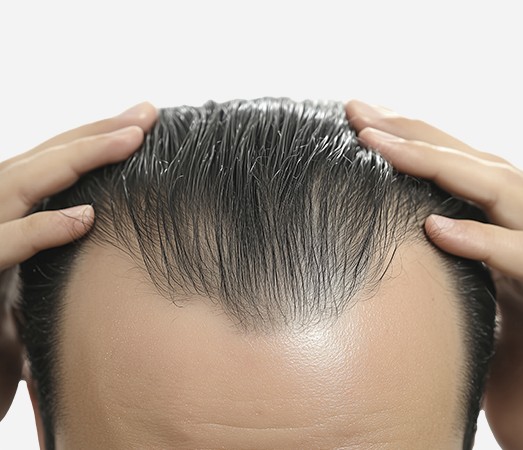
Male pattern hair lossAndrogenetic Alopecia
The key mechanism is the male hormone DHT (dihydrotestosterone), which gradually shrinks follicles and shortens the growth phase. It is not just about shedding: the goal is to stop “follicular miniaturization,” in which thick, healthy terminal hairs turn into fine, fuzzy vellus hairs. To keep an M-shaped hairline or crown thinning from spreading, medication should be combined early on with treatments that improve the environment around the follicles.
-
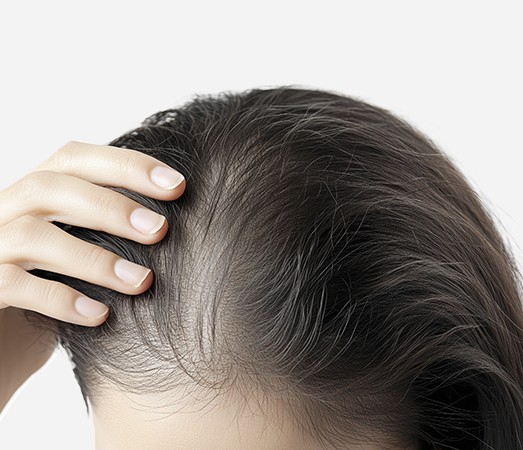
Female pattern hair lossAndrogenetic Alopecia
The hairline stays intact, but hair thins overall and loses density around the crown and part. Many factors play a role: DHT and hormonal imbalance, as well as stress and poor nutrition. We combine medication with treatments that deliver nutrients and growth factors directly to the follicles, helping hairs stuck in the resting (telogen) phase return to their growth orbit.
-
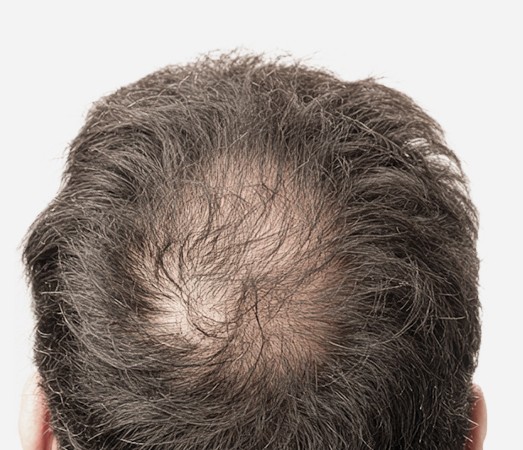
Alopecia areataAutoimmune Hair Loss
An autoimmune inflammatory condition in which the body’s own immune cells attack healthy hair follicles. It causes well-defined bald patches and may recur even after it clears. Treatment focuses on quickly suppressing the overactive immune response and inflammation to minimize follicle damage and steadily restore the hair ecosystem.
Program
Hair Loss Treatment Programs
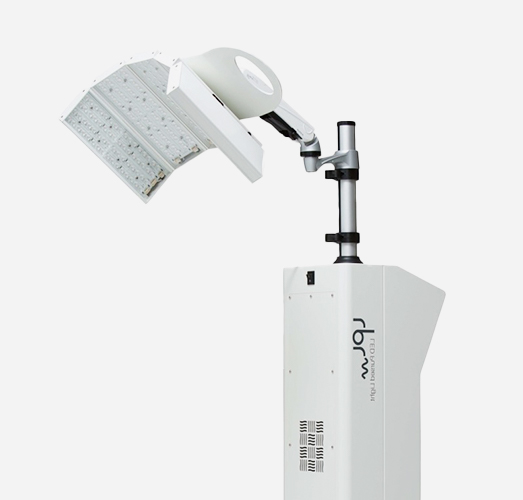
Phototherapy
Narrowband UVB
Uses specific wavelengths of light
to help stabilize skin reactions, ease inflammation
and rebalance skin condition. Used to calm
and restore sensitive skin.
Phototherapy Light therapy
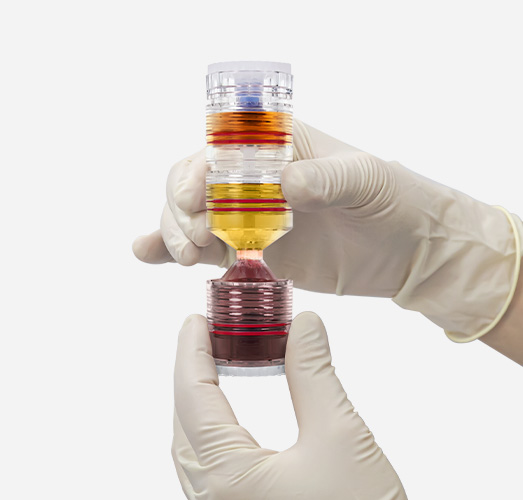
REORB Cell Scalp Treatment
Stem-cell growth factors
Highly concentrated stem-cell growth factors,
precisely extracted from your own tissue, are injected
deep into the scalp to help weakened follicles recover,
rebuilding the scalp environment
so hair can grow back healthier.
REORB Cell Scalp Treatment Scalp
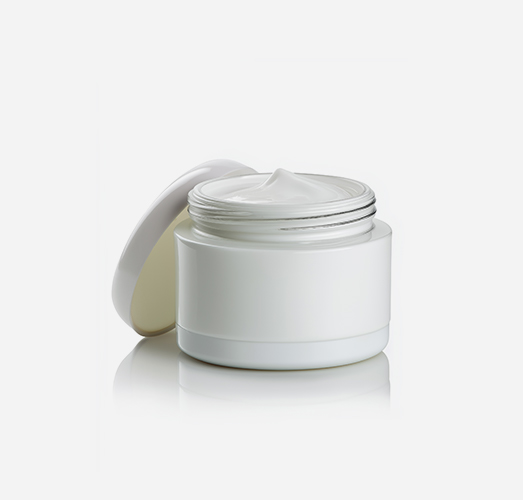
Oral & Topical Medication
Hair loss medication
Oral or topical medication is chosen
based on the cause and stage of hair loss.
Oral & Topical Medication Medication
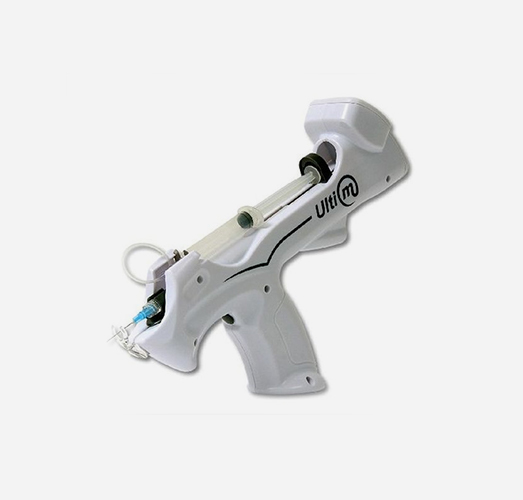
Perifollicular Injection
Scalp injection
Medication injected around the hair follicles
improves the perifollicular environment,
easing follicle shrinkage to support hair loss treatment.
Perifollicular Injection Scalp
Treatment
Care
Care Tips During Hair Loss Treatment
- Stay consistent
- Hair loss treatment requires regular, consistent sessions.
- Inflammatory hair loss
- If your hair loss involves inflammation, avoid whatever is irritating your scalp.
- Healthy habits
- Address habits that can affect hair loss, such as excessive stress, crash dieting and irregular meals.
- Don’t scratch
- If your scalp itches from inflammation, don’t scratch. Treatment can help relieve the symptoms.